 By
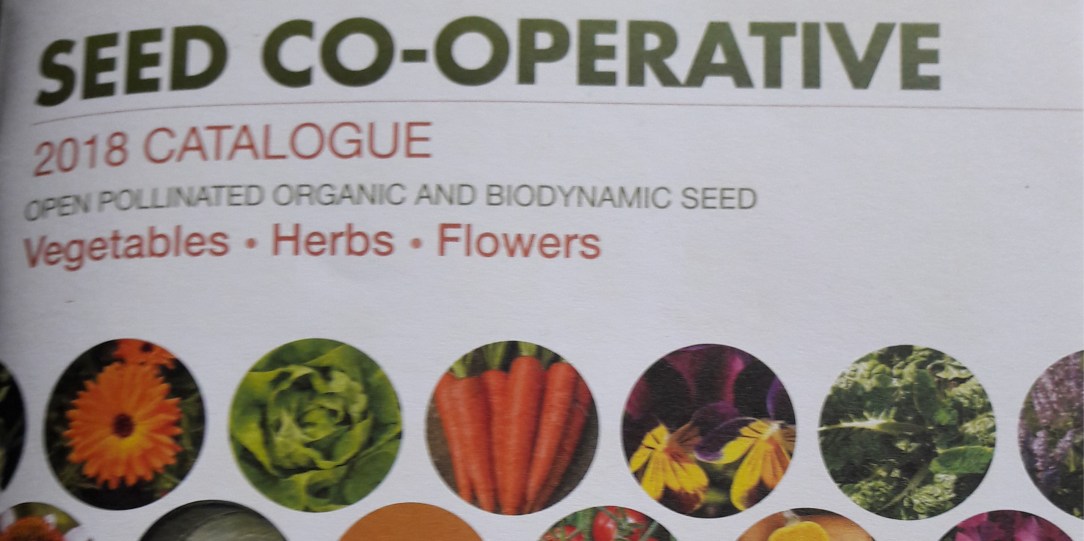
By Seed Co-operative is a community owned seed company that is growing and selling organic and biodynamic open pollinated vegetable, herb and flower seed in the UK. Launched in 2014, this initiative is building on the work of Stormy Hall Seeds which for 20 years has been the biggest organic vegetable seed producer in the UK on just seven acres. As a community benefit society, the capital backing is mainly provided through community shares, with 260 people current co-owners, and many more sought.
Nine of every 10 mouthfuls of food derive from seed, yet little vegetable seed is now produced in the UK. Eighty per cent of the organic open pollinated vegetable seed sold in the UK is currently imported. Globally, 75% of seed is sold by just three corporations (a few months ago, it was five) whose other interests lie in pesticides and fertiliser.
Evolution is an ongoing process. Our food system needs crops to evolve or the food system itself will be at risk. Without open pollinated seed the evolution of our food crops is in jeopardy. Choices being made about the shape of our food system are being driven by short-term economic considerations resulting in the domination of f1 hybrid varieties and the consequent loss of open pollinated varieties.
Natural resilience comes from the ability of species to adapt to changing conditions; that ability is inherently dependent on the genetic diversity within living organisms as much as having a diversity of species / varieties. Open-pollinated seed, compared to f1 hybrid or GM seed, has oodles of genetic diversity and provides for a resilient food system rooted in natural processes.
Since 1900 the global availability of food crop varieties has reduced by more than 90%. Many of the remaining open pollinated varieties are in desperate need of restorative maintenance after decades of under investment whilst seed companies have concentrated on f1 hybrids. There are parallels between plant breeding and computer programming: open-pollinated seed is in many ways equivalent to open source software and is available to all as a shared resource.
Seed companies commercial interests are protected by concentrating on f1 hybrids because seeds cannot be saved as they do not breed true-to-type, meaning growers have to go back every year to buy more seeds. Patents and other legal devices are also dominating the seed world, placing control of our food system in the hands of very few people. The seed co-operative is about demonstrating that this process is reversible.
The seed co-operative was recently a finalist on the BBC Food & Farming awards. David Price, of the seed co-operative, said: “We are delighted to have been given this chance to tell our story about the future of food. Food is not ‘man-made’ but a product of the natural world and it all starts with seed.
“We are bringing seed production back home and re-connecting farmers, growers, gardeners, chefs and ‘people who eat’ with the natural world, through co-operation. Diversity, health and democracy is what our seed is all about.”
 Kevin Pressland