 By
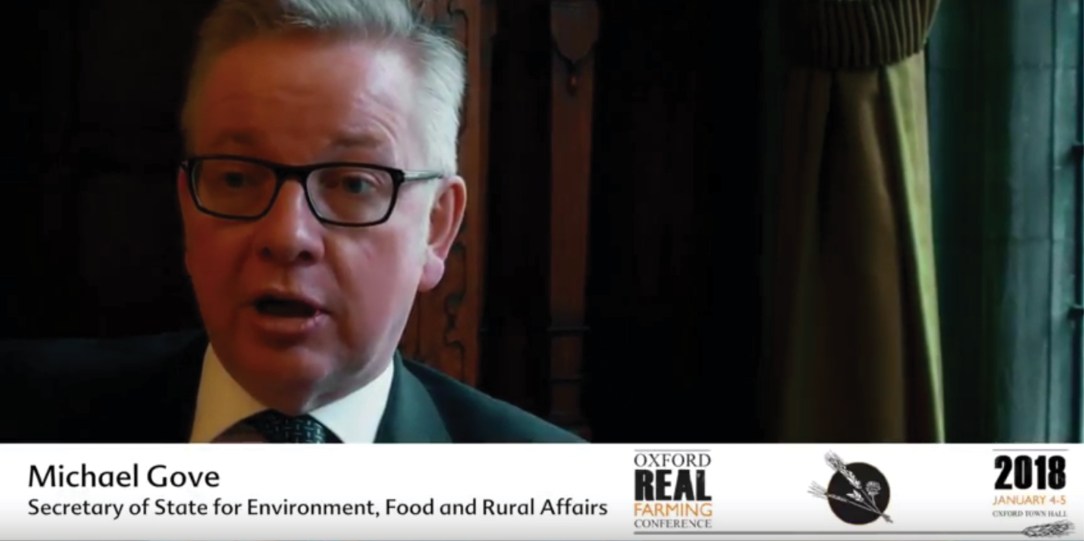
By The Oxford Real Farming Conference rivals the NFU Oxford Conference in January every year. It has now more delegates than the NFU conference, 800 this year. And as if to highlight its rise in prominence, this year’s conference was addressed by environment, food and rural affairs secretary Michael Gove.
It’s not about being rivals but has evolved to address the clear discrepancy in funding and land management and R&D support between largely but not entirely small, medium and large farms to large estates. Since 80% of general Common Agriculture Policy (CAP) subsidies go to larger, often commodity and forestry estates, 20% to small and medium-sized enterprises.
When you see the figures produced by the EU Commission in 2011 that 21 of the 28 EU countries, small farms were more productive than big ones and in nine countries, including the UK, small farms were more than twice as productive (EUROSTAT 2001 Statistics in Focus, 18/2011: Brussels Commission). This is further confirmed by recent studies by the UN Food & Agriculture Organisation and the UN Environment Programme.
Yet there is a constant predation on the smaller farmer by the system that pervades – eg. Sir Julian Rose, a successful Oxfordshire farmer in the UK has been working with his Polish partner to help safeguard the wonderful farm heritage of small, medium farms in Poland under the Campaign to Protect the Polish Countryside. Since joining the EU the EU commission has been trying to destroy these farms to create larger enterprises. Sir Julian Rose had a meeting at the EU and an official told him that the EU’s intention was to have ultimately only large farms and intends to encourage the demise of the smaller farmer.
Productivity should of cause not be the only parameter for efficiency it’s about good soil, water, and biodiversity management, pest and disease control that works with nature rather than against it, good livestock management and welfare. The current big farming obsession of the free market neo liberal approach obsessed with largely commodity trading and treating farmers as largely mere pawns in the world trade market has to surely stop.
Farming and horticulture may be a small percentage of GDP, but having a situation where, since the 1980s, the area growing vegetables has declined by 26% and the area growing fruit by 35%. Such a decline is not surprising since only 1% of Pillar 1 direct payments through the CAP are offered to the horticultural sector.
Currently, UK production represents 58% of vegetables consumed and only 11% of fruit. As a result fresh produce is by far the greatest source of imports into our food system. This system is surely untenable for several reasons. A lack of support for horticulture contradicts overwhelming health advice to increase fruit and vegetable consumption and reduce consumption of meat and dairy products.
Similarly the ornamental sector is been pummelled by imports and the effects of new diseases and pests are becoming an increasing issue. Should we not be protecting and enabling our own industry to flourish and supply a bigger percentage of our ornamentals and cutflowers?
As far as R&D is concerned only 1% of R&D funding goes into organics, permaculture, alley cropping etc the rest into chemical and bio engineering clearly propping up and supporting the cooperate lobby.
The Land Workers Co-operative has produced a brilliant new film in collaboration with a film producer called, ‘In our Hands’, its well worth seeing, very thought provoking and highlights the current predicament.
Also worth following is the Ecological Land Co-operative who some five years ago struck a deal with the Devon County Council to create four smallholdings on undulating land each 6 acres each. They have to prove that in five years, that started in 2014 they can both build a house to strict ecobuilding criteria with their own energy and water supply and make a viable horticulture business with added value.
If they can show they can create a viable business they can stay on the site (they now have another similar site apparently in Sussex). This will create a precedence for more people to have an opportunity to create a life in the countryside that is both beautiful, all be it hardwork and financially viable, and help create viable local economies. Current planning law will be forced to change, one hopes.
Often the media would have you believe that young people do not want to get their hands dirty and combat the elements etc, this is far from the truth as the Professional Gardeners’ Guild can see through the numbers applying for the three year traineeship scheme.
A friend of mine has a 180 acre farm in Hertfordshire a fantastic example of mixed farming system using organic/permaculture techniques. He advertised for 14 interns some four years ago and attracted 250 applicants in the first week.
This enthusiasm has to surely be encouraged; we cannot allow disillusionment to take ahold again.
Can we?
 Kevin Pressland